Four Seasons, One Van: Cold Weather Done Properly
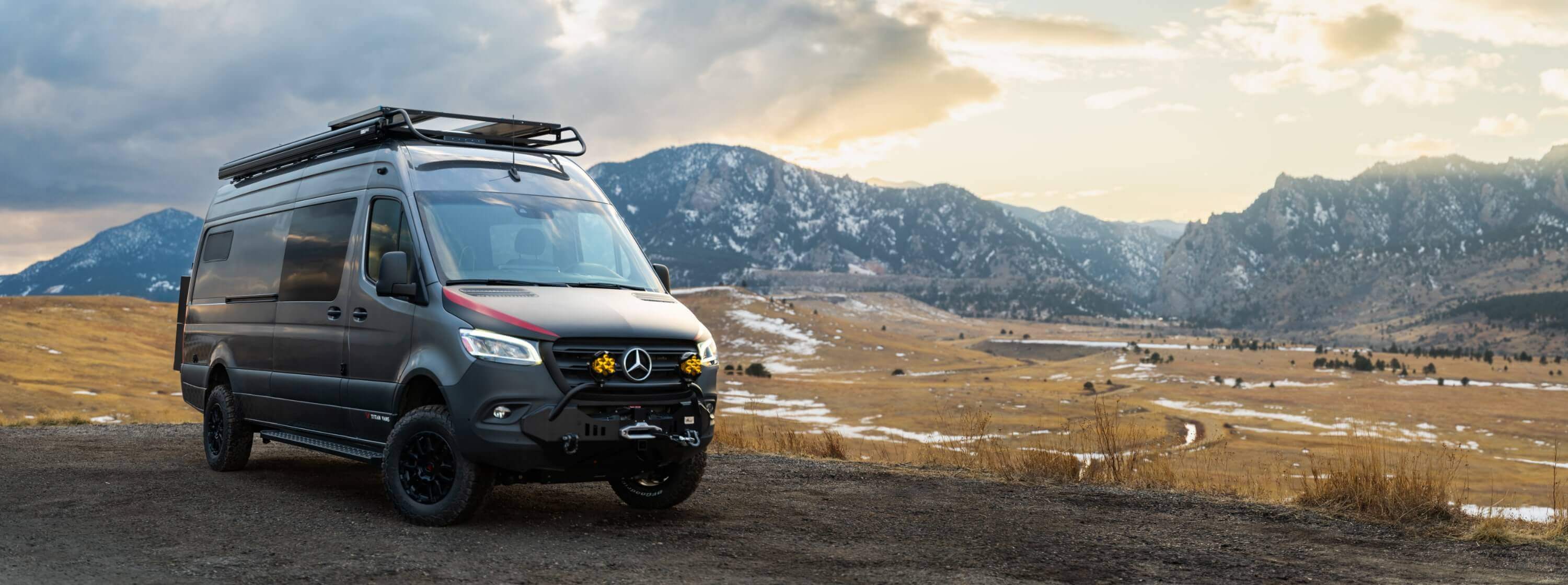
We build in Boulder, Colorado. Winter is not a feature we added later.
Plenty of camper vans are described as four-season. Far fewer have spent a January night at nine thousand feet. We build ours in Boulder, Colorado, which means cold weather is not a specification we chased — it is the environment the vans are tested in by default.
Getting winter right comes down to three things, and only one of them is the heater.
1. Heat that does not drain your batteries
Electric heat is wonderfully simple and will empty a battery bank in a matter of hours. That is why serious cold-weather vans use a diesel or gasoline air heater drawing from the vehicle's own fuel tank. It sips electricity — enough to run a fan and a fuel pump — and produces genuinely substantial heat for days on a few gallons.
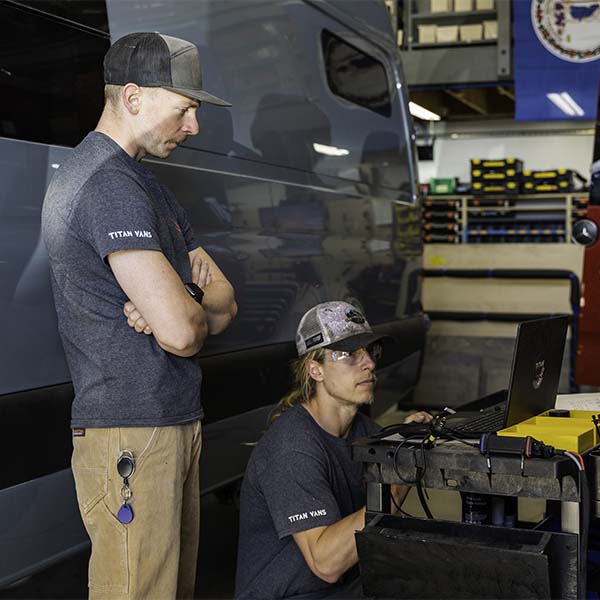
The trade-off is that it needs to be installed correctly: the combustion chamber is fully sealed from the cabin, the exhaust is routed away from where you sleep, and the intake stays clear of snow. This is not a component to economize on, and it is one we service in-house rather than sending elsewhere.
2. Insulation, and the part everyone forgets
Insulation gets discussed as though it were a single number. In a metal van it is really two separate problems.
The first is straightforward: fill the cavities so heat stays in. The second is thermal bridging — the steel ribs running through the walls and roof conduct heat straight to the outside no matter how well the space between them is packed. A van insulated to an impressive-sounding depth with the ribs left bare will still stream heat out through the frame and grow condensation on every metal surface.
Handling the bridges is unglamorous, invisible in photos, and the single biggest difference between a van that feels warm and one that merely has a good heater.
3. Water that does not freeze
The plumbing is what actually ends most winter trips. Water expands as it freezes, and it does not much care what it breaks on the way. Freeze protection means keeping tanks and lines inside the heated envelope wherever possible, heating them where it is not, and giving you a way to drain the system quickly when you park the van for a cold spell.
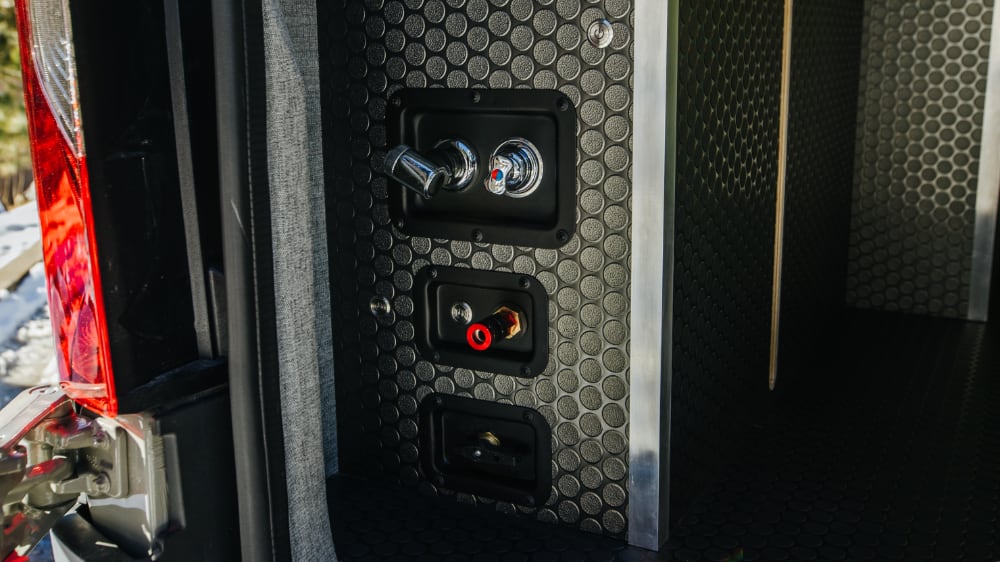
We walk every owner through winterizing and de-winterizing, and both procedures are recorded step by step in our video tutorials so you are not relying on memory in November.
The honest summary
A well-built van will keep you comfortable in genuinely cold weather. It will not make winter camping effortless — you will still be clearing snow off the intake and thinking about where you park. But the difference between a van that handles cold and one that merely tolerates it is the difference between a season you look forward to and one you sit out.